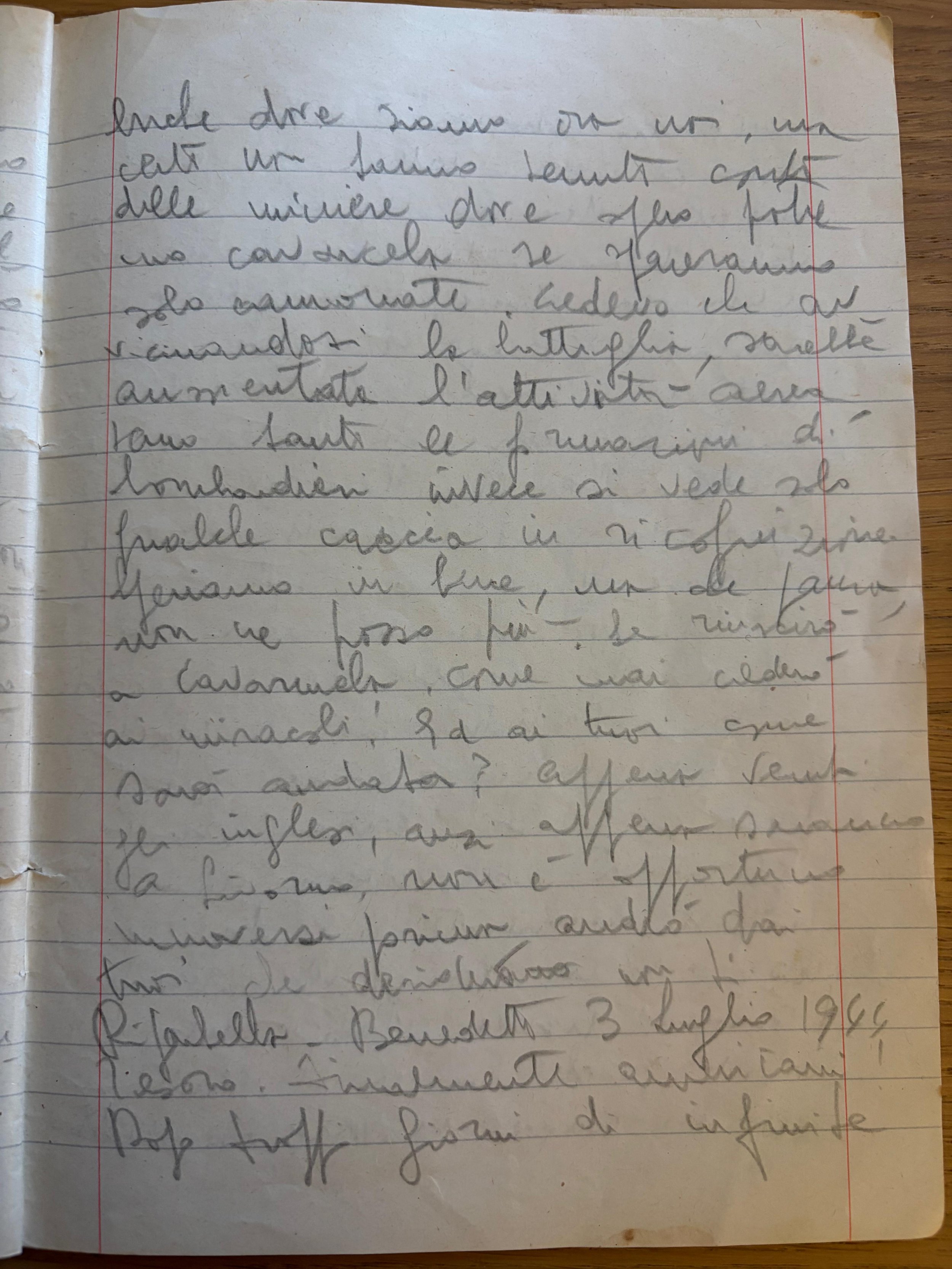
DIARIO 3. ‘Benedetto’ 3 Luglio 1944. ‘Liberazione, gli Americani’
[ITA]
[Dal rifugio]. Tesoro, finalmente gli Americani! Dopo troppi giorni di infinite peripezie, siamo statu liberati. Già da ieri mattina truppe di avanguardia circolavano per le vie e la notizia è stata appresa con entusiasmo poiché sai bene che per noi come per tutti americano vuol dire veramente liberazione da tutti questi travagli. Non ti dico le peripezie, specie di questi nove giorni di caverna. Mi hanno detto che scrivevo “Le mie memorie”, io ho risposto che scrivevo “Le mie prigioni” [un omaggio all’omonima opera di Silvio Pellico]. Infatti cosa è questa se non una prigione, questo buco 50 metri sotto la terra?
C’è stato del duro a Riparbella: alcuni giorni di resistenza, uno dei quali accanitissimo. Siamo stati un’intensa giornata e nottata sotto un cannoneggiamento continuo. Cannonate tanto forti che in miniera, a tutta questa profondità, lo spostamento faceva spegnere le candele. Siamo vivi, e proprio per miracolo di Dio. Ieri notte mi sono svegliata con un’esplosione che mi ha sollevato. Mi sono avviata con mamma all’uscita, perché avevo l’impressione che fosse franata una parte di miniera (ho tanto tanto paura di fare la morte del topo). Quando ho sentito urlare ‘I tedeschi! I tedeschi!’ ho guardato ed ho vistro entrare uno con bombe a mano sollevate e con una faccia da fare orrore. Sono corsa in fondo alla miniera col cuore in bocca. Ho avuto l’impressione di morire assassinata dai Tedeschi. Meno male che c’era Arpad che gli ha detto che non c’erano i partigiani che cercavano e garantiva che nessuno possedesse armi!
Ieri aveammo il primo incontro con gli Americani. Facemmo 5 km per raggiungerli. Non vedeva l’ora per chiedere notizie di te cioè dei badogliani. Mi hanno detto che i piloti li fanno volare su tutti i fronti e che, man mano che gli Alleati avanzano, li manderanno in licenza e che la posta sarà ripristinata prestissimo. Sono piena di grandi speranze ed a giorni aspetto che non ti dico ormai più quanto desidero perché non esistono parole. L’impressione che mi hanno fatto gli Americani è superiore dello sperato. Abituata ai visi arcigni dei Tedeschi, ci siamo commossi alla giovialità dei Liberatori. Hanno dato dolci a Giorgio e Marta [i nipoti di Lella] e mi è sembrato che un futuro libero si sta avvicinando. Stamani gli Americani giravano di qua. Aspettavano ed avevano fame, cosi li abbiamo invitati nella nostra baracca e gli abbiamo offerto il caffe, pane e mele cotte e vino, e ognuno si è prodigato a portargli qualcosa. Io di tutto cuore mi sono tolta quel pane perché Americano significa vederti Mario, mi sembri ravvicinato ora anche solo materialmente e poi penso che tu sei lontano ed avrai piacere che le famiglie si prestassero per te se mai ti trovassi in una situazione simile.
Il paese è tutto imbandierato ed i rei fascisti stanno già scontando il fio [la pena]. All’ingresso della baracchetta abbiamo attaccatto un manifest tricolore inneggiante ai Liberatori. Sono stordita da tanti avvenimenti e tra pochi giorni potremo tornare a Castiglioncello che non è ancora liberata (gli Alleati sono ora a Vada) ed andare a Populonia ad aspettare la tua posta e chissà, anche te! Non voglio soffermarmi su questa ultima, grande cosa benché sia il pensiero di tutti i miei giorni. Nonestante gli Americani che ho lasciato anche ora in baracchetta, devo stare in rifugio perché le cannonate ficcano da tutte le parti, in partenza e in arrivo da sembrare la fine del mondo. Ma questo è naturale: gli Americani avanzano e i Tedeschi cercando di martellare le colonne. Forse domani sera tornerà la calma e dopodomani ritorneremo in paese a Riparbella dove aspetteremo di tornare a Castiglioncello. Se Dio ci farà la grazia di lasciarci in piedi la casa.
Marino, ho fatto una lunga chiacchierata con te e mi sento bene. Sappi che ti aspetto da oggi ogni minuto ed ho tanta, tanta fiducia di cominciare fra breve (gli Americani hanno detto che fra 3 mesi sarà tutto finito) una nuova vita di lavoro e felicità! Ti bacio con tutta la passione del mio cuore.
___________________________________________________________________________
La liberazione di Riparbella e la vicina Rosignano Solvay fu conseguente a battaglie durissime nei giorni successivi al 3 Luglio 1944. Come riportato dal sito LungomareCastiglioncello:
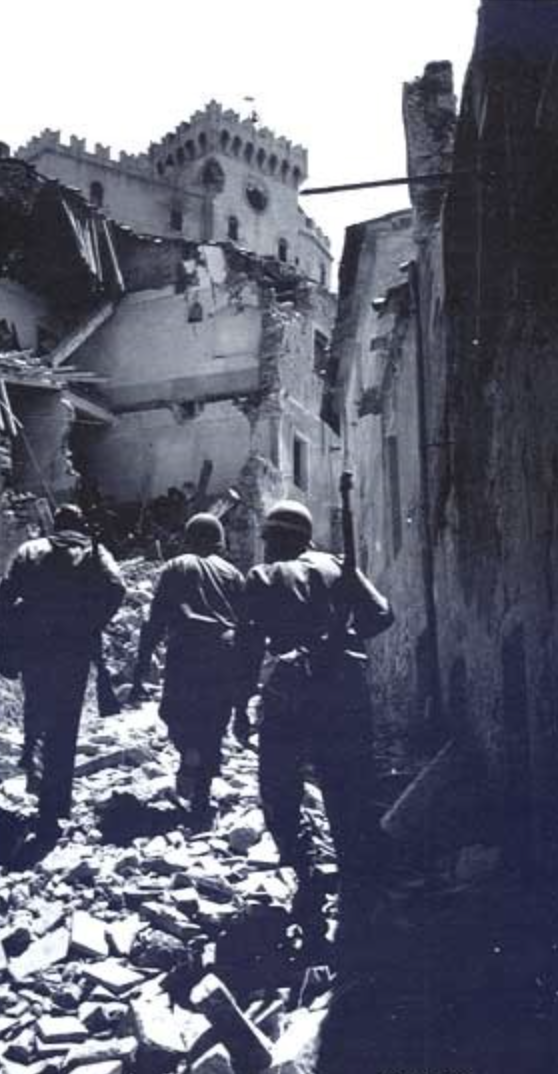
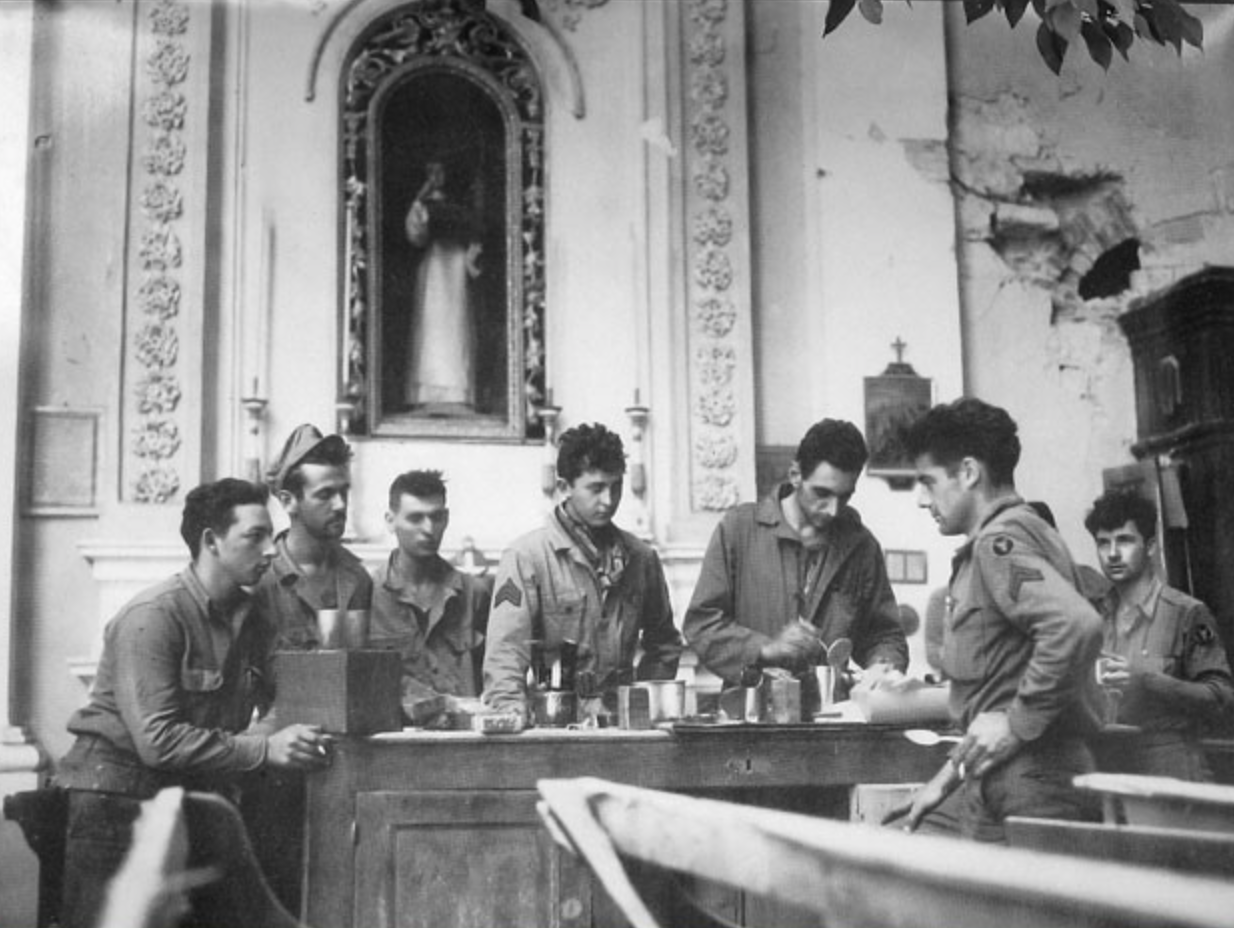
“Nella giornata del 3 luglio Riparbella e Rosignano Solvay furono liberate dal 168° Rgt; l'attenzione del comando americano era rivolta verso la conquista della cittadina di Rosignano che di fatto, essendo posizionata su di un' altura a ridosso della via Emilia, rappresentava un notevole sbarramento all'accesso verso il litorale livornese e alla stessa città di Livorno. Per la grande concentrazione della resistenza tedesca e per la durezza dei combattimenti occorsi alla sua conquista Rosignano (Hill 140) diverrà famosa nella storia degli Stati Uniti come “The little Cassino” (la piccola Cassino). Il 4 luglio iniziò l'avvicinamento alla cittadina; numerosi furono i singoli atti di valore e molte furono le ricompense al valore soprattutto fra le file dei soldati nippo-americani. La tenace resistenza tedesca impose, anche nei successivi giorni 5 e 6 luglio, che si fecero ancora più pesanti nei giorni 7 e 8 Luglio 1944. Il giorno 8 alle ore 17, con diverse perdite, la cittadina di Rosignano fu finalmente liberata.” https://www.lungomarecastiglioncello.it/rosign_mar/Ros_M_ieri/Fotogalleria_48_Luglio44/Galleria_48_luglio44.htm
American solderies in Rosignano below:
[EN] “Liberation, the Americans”
[From the shelter]. My darling, at last the Americans! After too many days of endless ordeals, we have been liberated. Already since yesterday morning, advance troops have been moving through the streets, and the news was received with overwhelming enthusiasm, because you know well that for us, as for everyone, American truly means liberation from all these sufferings. I cannot even begin to tell you of what we have endured, especially during these nine days in the cave. They told me I was writing “My Memoirs,” and I replied that I was writing “My Prisons” [a reference to the work by Silvio Pellico]. Because what is this, if not a prison, this hole fifty metres underground?
There was fierce fighting in Riparbella: several days of resistance, one of them particularly brutal. We spent an entire day and night under uninterrupted shelling. The blasts were so violent that down in the mine, at such depth, the shockwaves blew out the candles. We are alive, and truly by a miracle of God. Last night I woke up to an explosion that lifted me off the ground. I went with Mama toward the exit, because I feared part of the mine had collapsed (I am terribly, terribly afraid of dying like a trapped rat). When I heard people shouting “The Germans! The Germans!” I looked up and saw one of them entering with grenades raised, his face terrifying to behold. I ran to the back of the mine with my heart in my throat. I truly thought I would be murdered by the Germans. Thank God Arpad was there and told them there were no partisans hiding inside and guaranteed that no one had weapons.
Yesterday we had our first encounter with the Americans. We walked five kilometres to reach them. I could hardly wait to ask for news of you, of the Badogliani. They told me that pilots are flown across all fronts and that, as the Allies advance, they will be sent on leave and that the mail service will be restored very soon. I am filled with great hope, and day by day I await what I can no longer even express in words, because no words exist. The impression the Americans made on me exceeded all expectations. After being accustomed to the harsh faces of the Germans, we were deeply moved by the warmth and friendliness of the Liberators. They gave sweets to Giorgio and Marta [Lella’s nephews], and it felt as if a free future were finally approaching.
This morning the Americans were passing through here. They were waiting and they were hungry, so we invited them into our hut and offered them coffee, bread, baked apples, and wine, and everyone did their best to bring them something. I gave my share of bread with all my heart, because American means seeing you, Mario; you feel closer to me now, even if only materially, and I think too that you are far away and would want families to do the same for you, should you ever find yourself in a similar situation.
The village is covered in flags, and the guilty Fascists are already paying their price. At the entrance to the hut we hung a tricolour banner praising the Liberators. I am dazed by all that has happened, and in a few days we may return to Castiglioncello, which is not yet liberated (the Allies are now in Vada), and then go to Populonia to wait for your letters and, who knows, perhaps for you as well! I do not want to linger on this last, great thought, even though it fills all my days. Despite the Americans still staying here in the hut, we must remain in the shelter because shells are flying everywhere, outgoing and incoming, as if it were the end of the world. But this is to be expected: the Americans advance, and the Germans try to hammer their columns. Perhaps tomorrow evening calm will return, and the day after tomorrow we will go back into Riparbella to wait until we can return to Castiglioncello, if God grants us the grace of finding our house still standing.
Mario, I have spoken with you at length and I feel lighter. Know that from today onward I wait for you every single minute, full of faith, hoping that very soon (the Americans say that in three months it will all be over) we will begin a new life of work and happiness. I kiss you with all the passion of my heart.
___________________________________________________________________________
The liberation of Riparbella and the nearby town of Rosignano Solvay followed extremely fierce battles in the days after 3 July 1944. As reported by the website LungomareCastiglioncello:
“On 3 July, Riparbella and Rosignano Solvay were liberated by the 168th Regiment. The attention of the American command was focused on the capture of the town of Rosignano which, positioned on a hill overlooking the Via Emilia, constituted a significant barrier to access to the Livorno coastline and to the city of Livorno itself. Because of the strong concentration of German resistance and the harshness of the fighting required to capture it, Rosignano (Hill 140) would become known in United States history as ‘The Little Cassino.’
On 4 July, the advance toward the town began; there were numerous individual acts of bravery, and many decorations for valor were awarded, particularly among the ranks of Japanese-American soldiers. The stubborn German resistance continued over the following days, 5 and 6 July, and intensified further on 7 and 8 July 1944. On 8 July at 5:00 p.m., after sustaining significant losses, the town of Rosignano was finally liberated.”