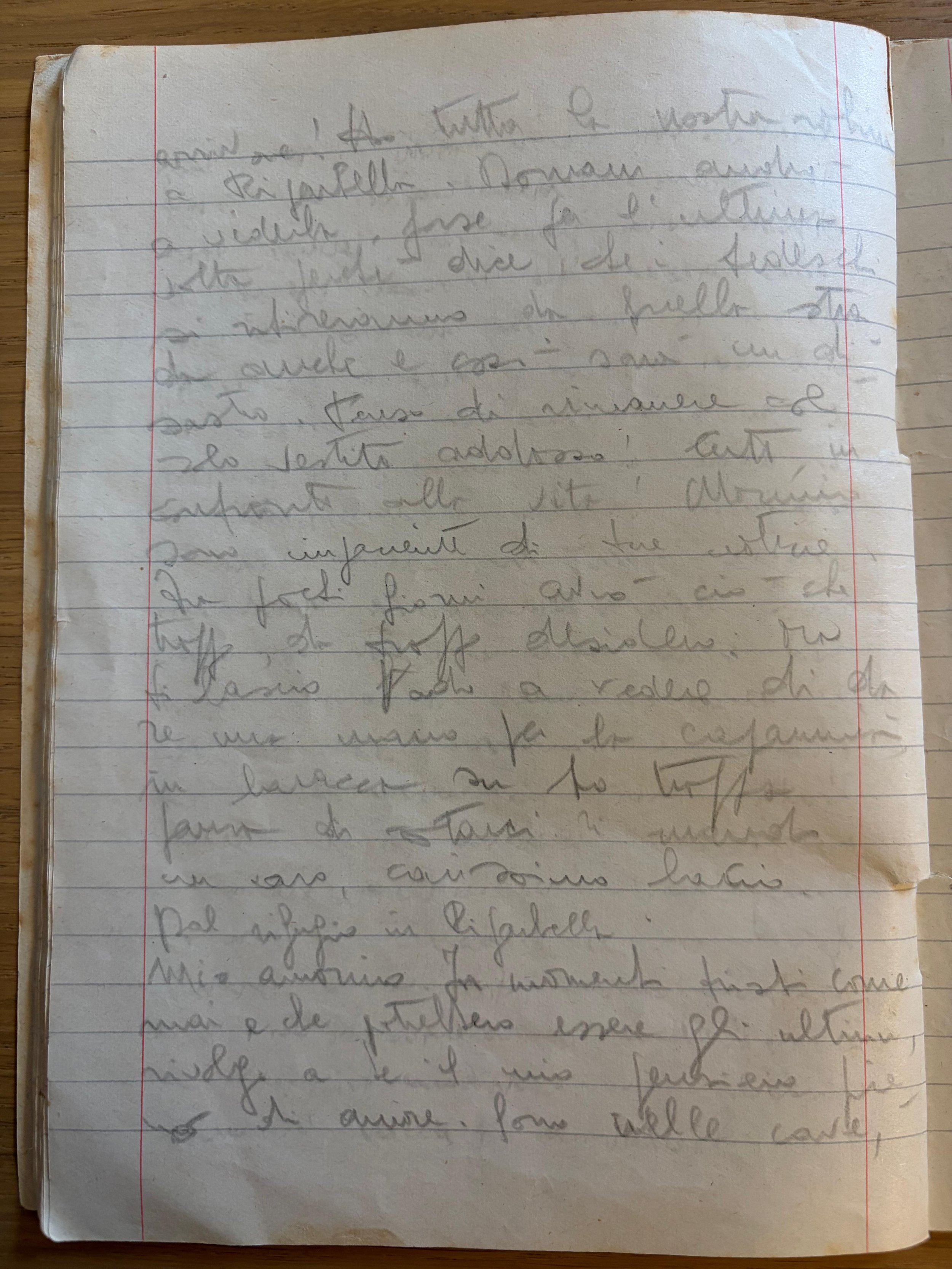
DIARIO 3. 1 Luglio 1944.“La morte del topo”
[ITA]
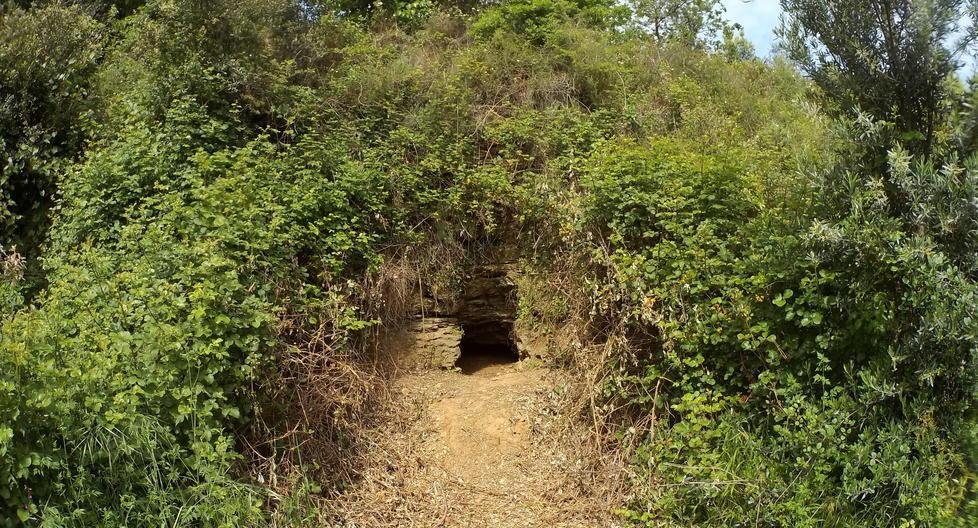
[Dal rifugio di Riparbella]. Mio amorino. In momenti tristi come mai e che potrebbero essere gli ultimi, rivolgo a te il mio pensiero pieno di amore. Sono nelle cave, 50 metri sotto terra, molti per riparare da cannonate e bombe, eppure sono piena di paura che una delle tre uscie venga ostruita e che noi si faccia la morte del topo. Questi 2 o 3 ultimi giorni stavamo in miniera solo la notte a dormire, il giorno stavamo nella baracchetta di canne perché la guerra era ancora relativamente lontana.
Andavamo sul poggetto a vedere le azioni delle opposte artiglierie e confesso che ho veduto tutto ciò con interesse e con tremenda paura perché non immaginavo minimamente cosa fosse un’avanzata e non credevo significasse tanta distruzione. Le artiglierie sparavano molto ravvicinate, si sentivan lunghi boati e si vedevano grandi fumate sotto cui chissa quanta distruzione ci sarà stata. Ieri abbiamo assistito allo sbarramento inglese verso Cecina! Battevano terribilmente la via Aurelia e il mio pensiero è corso a Babbo che era rimasto a Caletta ed alla casa che quasi con certezza verrà distrutta! Stanotte cannoneggiamenti continui sul fronte della Seconda e della Quarta armata, che erano più vicine a noi.
Stamani gli Inglesi fanno giorno di copertura addirittura a San Martino, stazione di Riparbella, e si pensa che in giornata o domani mattina verrà il momento terribile per noi da cui ben pochi penso potremo uscire. I Tedeschi hanno detto che conviene stare in case di contadini anziché nelle buche dove siamo noi ora, ma certo non hanno tenuto conto delle miniere dove spero potremo cavarcela se spareranno solo cannonate. Credevo che avvicinandosi la battaglia, sarebbe aumentata l’attività aerea, invece si vede solo qualche caccia in ricognizione.
Speriamo bene, ma che paura, non ne posso più. Se riuscirò a cavarmela, come mai crederò ai miracoli! E ai tuoi genitori come sarà andata? Appena venuti gli Inglesi, anzi, appena saranno a Livorno, andrò dai tuoi che desideravo un -
[Qui il racconto si interrompe, come se Nonna si dovesse dovuta rifugiare all’improvviso]
NOTA: Molte sono le storie di civili delle comunità intorno a Riparbella che, nei giorni immediatamente precedenti alla Liberazione, trovarono rifugio in cave sotterranee. Una prospettiva simile è raccontata in un articolo pubblicato da Il Tirreno nel 2016, che ricostruisce queste esperienze di paura, resistenza e sopravvivenza: https://www.iltirreno.it/cecina/cronaca/2016/06/01/news/una-storia-di-guerra-sepolta-in-un-rifugio-1.13582770#google_vignette
[EN] “The death of the rat”
(From the shelter in Riparbella). My dearest love. In moments as sad as these, which could well be the last, I turn my thoughts to you, filled with love. I am in the caves, fifty metres underground, many of us sheltering from shelling and bombs, and yet I am overwhelmed by the fear that one of the three exits might be blocked and that we might meet the death of the rat.
These last two or three days we had been in the mine only at night to sleep; during the day we stayed in the small hut made of reeds, because the war was still relatively far away.
We used to go up to the little hill to watch the actions of the opposing artillery, and I confess that I witnessed it all with both interest and terrible fear, because I had never imagined what an advance truly was, nor believed it could mean such destruction. The artillery fired at very close range; long booms echoed, and great plumes of smoke rose beneath which, who knows how much destruction, must have taken place. Yesterday we witnessed the English barrage toward Cecina! They struck the Via Aurelia mercilessly, and my thoughts ran to Papa, who had remained in La Caletta, and to the house, which almost certainly will be destroyed.
Last night there was continuous shelling along the fronts of the Second and Fourth Armies, which were closer to us.
This morning the English are providing daylight cover as far as San Martino, the Riparbella station, and it is thought that today or tomorrow morning the terrible moment will come for us, from which I believe very few of us will emerge. The Germans have said it is better to stay in farmers’ houses rather than in the holes where we are now, but they have certainly not taken the mines into account, where I hope we may manage to survive if they fire only artillery. I believed that as the battle drew closer, aerial activity would increase; instead, only a few fighter planes on reconnaissance can be seen.
Let us hope for the best, but how frightened I am, I really cannot bear it any longer. If I manage to get through this, I will truly believe in miracles! And how did it go for your parents? As soon as the English arrive, or rather, as soon as they reach Livorno, I will go to your family, for I have long wished to—
[Here the account breaks off, as if Nonna had to take shelter suddenly]
NOTE: Many accounts tell of civilians from the communities around Riparbella who, in the days immediately preceding Liberation, sought refuge in underground caves. A similar perspective is described in an article published by the Tuscan newspaper Il Tirreno in 2016, which reconstructs these experiences of fear, resistance, and survival: https://www.iltirreno.it/cecina/cronaca/2016/06/01/news/una-storia-di-guerra-sepolta-in-un-rifugio-1.13582770#google_vignette